
Gas Geyser Safety Tips: Prevent Carbon Monoxide Poisoning
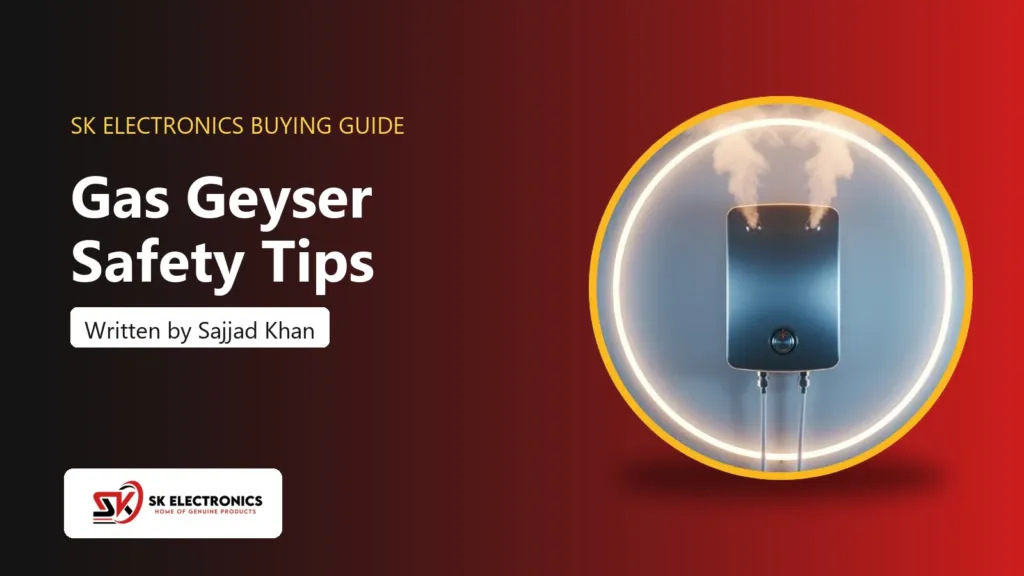
Quick answer: A gas geyser is safe when it is vented to the outside, installed by a qualified technician, serviced every year and never run in a closed room without ventilation. Burning gas makes carbon monoxide (CO), which you cannot see or smell; the US CDC lists headache, dizziness, weakness and upset stomach as its most common symptoms. Fit a battery CO detector near bedrooms, switch off gas appliances at night, and if you smell gas, open windows, shut the supply and call the SNGPL emergency helpline 1199.
Gas geyser safety checklist
- Vent to the outside. The CDC says gas appliances must be vented properly, and that horizontal vent pipes from a water heater should go up slightly as they go towards the outdoors.
- Never install it in a closed bathroom without a flue. The US Department of Energy’s Building America guide strongly recommends sealed combustion units, which take air from outdoors and exhaust outdoors.
- Use a qualified installer and service it every year. The CDC advises having gas appliances serviced by a qualified technician every year.
- Fit a carbon monoxide detector. The CDC recommends battery-operated or battery back-up CO detectors near every sleeping area, replaced as the maker says or every 5 years.
- Keep rooms and kitchens ventilated in winter. SNGPL’s Rawalpindi general manager stressed proper ventilation in rooms and kitchens to prevent gas accumulation.
- Switch off at night. SNGPL advises consumers to make sure all gas appliances, including stoves, geysers and heaters, are turned off.
- No rubber pipes. SNGPL advised against rubber pipes with gas heaters and stoves because of the safety risk; use proper fittings.
Signs of carbon monoxide poisoning
The CDC lists headache, dizziness, weakness, upset stomach, vomiting, chest pain and confusion, and notes the symptoms are often described as “flu-like”. Breathing in a lot of CO can make you pass out or kill you. If several people in the house feel unwell at the same time in winter, or someone feels dizzy in the bathroom while the geyser runs, suspect CO.
What to do
- Switch off the geyser and get everyone into fresh air at once.
- Call Rescue 1122 or go to a hospital if anyone has symptoms.
- Do not use the geyser again until a technician has checked the venting.
If you smell gas
- Do not switch electrical switches on or off and do not light a flame.
- Open doors and windows, and shut the gas valve.
- Leave the house and call the SNGPL emergency helpline 1199, as SNGPL advises.
Safety features to look for in a geyser
| Model | Type | Safety features listed |
|---|---|---|
| Nasgas DG-06L Crystal | Instant, 6 L/min | Auto cut-off, anti-freeze and dry burn protection |
| Nasgas DG-7L | Instant, 7 L/min | Auto safety cut-off, anti-freezing protection |
| Nasgas DEG-35 Super Deluxe | Storage, gas and 3.0 kW electric | Dual safety thermostat, brass safety valve rated 75 PSI with temperature meter, tank tested at 150 PSI |
These features protect against overheating and pressure problems. They do not remove the need for proper venting, because CO comes from burning gas.
Is an instant or storage geyser safer?
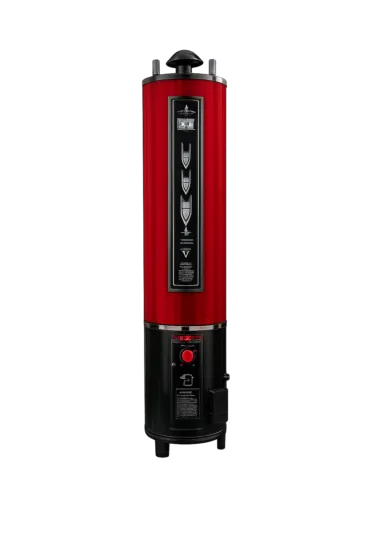
Both are safe when vented and installed correctly, and both burn gas. The difference is mainly how they heat and how much gas they use; see instant geyser vs storage geyser. A storage model with an electric element, such as the DEG-35, can also heat water on electricity when gas pressure is low.
Frequently asked questions
Is it safe to install a gas geyser in the bathroom?
Only if it is vented to the outside by a qualified installer. Sealed combustion units, which take air from and exhaust to the outdoors, are strongly recommended by the US Department of Energy’s Building America guide.
What are the symptoms of carbon monoxide poisoning from a geyser?
The CDC lists headache, dizziness, weakness, upset stomach, vomiting, chest pain and confusion. Get to fresh air and call Rescue 1122 if anyone feels unwell.
What is the SNGPL emergency number for a gas leak?
1199. SNGPL advises consumers to call its emergency helpline at 1199 or contact staff at nearby SNGPL offices.
How often should a gas geyser be serviced?
Every year, by a qualified technician, as the CDC advises for gas appliances.
Do I need a carbon monoxide detector?
It is a sensible, low-cost safeguard. The CDC recommends battery-operated or battery back-up CO detectors near every sleeping area.
Next steps
Compare our geysers, and read instant geyser vs storage geyser to choose the type. For a safer way to heat a room in winter, a heat and cool inverter AC burns no gas; see our split AC buying guide.
Also read: electric geyser vs gas geyser, heating a room with AC heat mode.
Sources
- US Centers for Disease Control and Prevention, Carbon Monoxide Poisoning Basics: cdc.gov/carbon-monoxide/about
- US DOE Building America Solution Center (PNNL), Gas-Fired Tankless Water Heaters: basc.pnnl.gov
- Associated Press of Pakistan, GM SNGPL Rawalpindi urges caution in gas usage during winter: app.com.pk