
Inverter vs Non-Inverter Refrigerator: Which Should You Buy?
Quick answer: An inverter refrigerator changes its compressor speed to match the cooling it needs, while a non-inverter refrigerator runs its compressor at full power and then switches it off. ENERGY STAR says this adaptive inverter design raises efficiency by at least 25% compared with standard units. Inverter models usually cost a little more, but they suit homes with load shedding, UPS or solar power. A non-inverter fridge is still a good buy if you want the lowest price and your electricity supply is steady.
How does a non-inverter refrigerator work?
ENERGY STAR explains that in a standard refrigerator, the compressor runs at maximum capacity when the inside warms up, and it is turned off when the set temperature is reached. It then starts again at full power when the temperature rises. You can often hear this as a click and hum every so often.
How does an inverter refrigerator work?
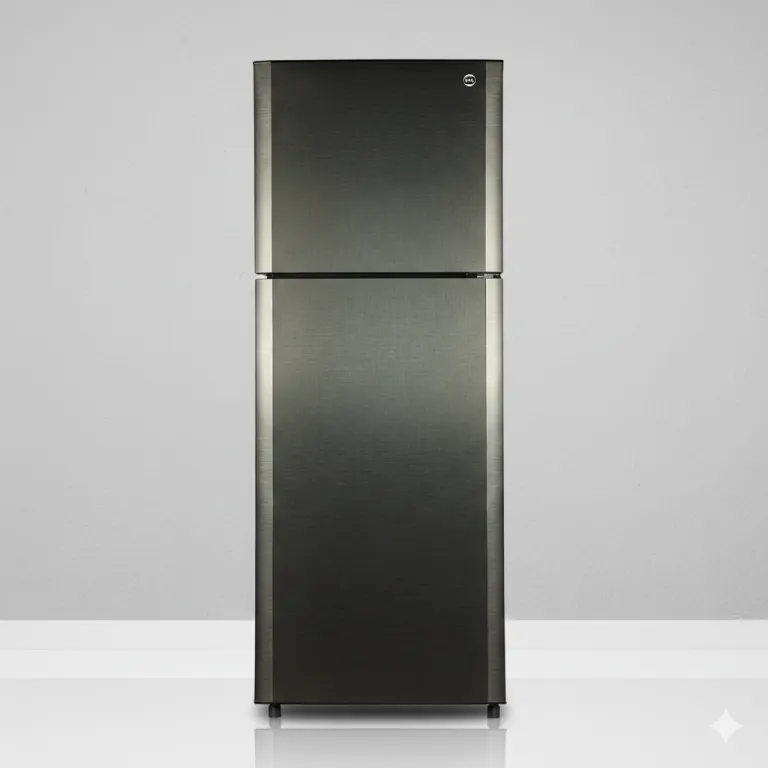
An inverter refrigerator pairs an inverter compressor with sensors and controls that can raise or lower its cooling output. ENERGY STAR calls this an advanced adaptive compressor system. Instead of switching between full power and off, it slows down once the fridge is cold and speeds up when you open the door or load warm food. ENERGY STAR says the efficiency of each unit increases by at least 25% with this technology compared with standard units.
Inverter vs non-inverter refrigerator: side by side
| Point | Non-inverter | Inverter |
|---|---|---|
| Compressor | Full power or off | Changes speed to match the need |
| Energy | Standard | At least 25% more efficient, according to ENERGY STAR |
| Temperature inside | Swings a little between cycles | Held steadier |
| Noise | Clicks on and off at full power | Runs more smoothly at lower speed |
| UPS and solar | Check the model | Our PEL InverterOn range is listed as UPS and solar compatible |
| Price | Usually lower for the same size and finish | Usually a little higher |
Real models compared: what the spec sheets say
Here are refrigerators from our own range, using the figures on their product pages. Prices are at the time of writing and change with the market.
| Model | Type | Size | Rated power | Low voltage start | Price |
|---|---|---|---|---|---|
| PEL InverterOn VCM | Inverter | 240 to 334 L | 82 to 130 W | about 100 V | Rs 83,500 to Rs 104,500 |
| PEL PRINVOVCM-2350 | Inverter | 240 L | 130 W | listed for low voltage use | Rs 81,999 |
| PEL PRINVOFGD-2550 | Inverter, glass door | 260 L | about 130 W | not listed | Rs 96,500 |
| PEL Glass Door | Non-inverter | 168 to 334 L | 140 W | not listed | Rs 68,000 to Rs 98,000 |
| PEL PRGD-2350 | Non-inverter, glass door | 240 L | about 130 W | not listed | Rs 89,999 |
| PEL PRLP-1400 | Non-inverter, single door | 135 to 140 L | 100 to 110 W | 100 V | Rs 49,000 |
Three things stand out from this table:
- Rated watts look similar. The inverter PRINVOVCM-2350 and the non-inverter PRGD-2350 are both listed at about 130 W for 240 litres. The rated figure shows the power while the compressor runs. The saving from an inverter comes from how it runs over the whole day, at lower speed and without restarting at full power, which a single watt figure does not show.
- Low voltage startup is not only for inverters. The non-inverter PEL PRLP-1400 also lists startup at 100 V. Check this line on the spec sheet if your voltage drops in the evenings.
- Price depends on the door too. At the time of writing, the inverter PRINVOVCM-2350 (Rs 81,999) costs less than the non-inverter glass door PRGD-2350 (Rs 89,999) of the same size. A glass door or metal finish can add more to the price than the inverter does.
Is an inverter fridge better for load shedding, UPS and solar?
For most homes with power cuts, yes. A fridge with an inverter compressor changes speed smoothly, and our PEL InverterOn range is listed by PEL as UPS and solar compatible, with startup at about 100 V. Kenwood’s spec table for its Persona refrigerators gives the same picture: startup at about 170 V for the non-inverter version and about 110 V for the inverter version.
If you run your home on a UPS or a solar inverter, tell our team the size of your system before you buy. We will check that the fridge you choose is listed as compatible.
Is an inverter refrigerator worth the extra money?
It depends on three things:
- How many hours it runs. A fridge runs all day, every day, so even a modest saving adds up over the years.
- Your supply. If you have load shedding, low voltage or a UPS or solar system, the inverter’s smooth start and low voltage operation matter more than the energy saving.
- The price gap for the size and finish you want. Compare the same size and the same door type. As the table shows, the gap is sometimes small or even reversed.
A simple way to decide: if the inverter version of the size and finish you want costs only a little more, buy the inverter. If the gap is large, your power supply is steady and the fridge is a second fridge used lightly, a non-inverter model is a sensible saving.
Which one should you buy?
- Choose an inverter refrigerator for a main family fridge, for homes with load shedding, UPS or solar, or if you want a quieter, steadier fridge.
- Choose a non-inverter refrigerator for the lowest price, for a second fridge, or for a bedroom, office or shop where a compact single door model such as the PRLP-1400 fits best.
- In both cases, get the size right first. A fridge that is too big for your family wastes energy whatever its compressor. Our refrigerator size guide shows you how to choose.
Frequently asked questions
Which is better, an inverter or a non-inverter refrigerator?
An inverter refrigerator is more efficient and handles load shedding, UPS and solar better. ENERGY STAR says its adaptive inverter compressor raises efficiency by at least 25% over standard units. A non-inverter refrigerator is cheaper and fine for a steady supply or a second fridge.
Does an inverter fridge save electricity?
Yes. ENERGY STAR says refrigerators with an advanced adaptive (inverter) compressor are at least 25% more efficient than standard units, because the compressor slows down instead of switching between full power and off.
Can an inverter refrigerator run on solar?
Many can. Our PEL InverterOn range is listed as UPS and solar compatible. Tell our team the size of your solar or UPS system so we can check the model you choose.
Why do some non-inverter fridges show the same watts as inverter ones?
The rated watts show the power while the compressor runs. An inverter saves energy by running slower and avoiding full-power restarts through the day, which a single watt figure does not show.
Is an inverter refrigerator more expensive?
Usually a little, for the same size and finish. But the door and finish also change the price. At the time of writing, our inverter PEL PRINVOVCM-2350 costs less than the non-inverter PEL PRGD-2350 glass door of the same 240 litre size.
Next steps
Compare inverter and non-inverter models in our refrigerator range, or visit a branch to see the finishes in person. Installments are available for Govt employees; see installments. For more help, browse all our buying guides.
Also read: refrigerator not cooling? 9 checks, does an inverter fridge need a stabilizer?.
Sources
- ENERGY STAR, Advanced Adaptive Compressors (Emerging Technology Award): energystar.gov advanced compressors
- Product specifications: PEL InverterOn VCM, PRINVOVCM-2350, PRINVOFGD-2550, Glass Door, PRGD-2350, PRLP-1400 and Kenwood Persona Plus product pages on this site.