
BLDC Fan vs Normal Fan: Watts, Units and Savings
Quick answer: A BLDC (brushless DC, also sold as DC inverter) ceiling fan uses far less electricity than a normal fan for the same sweep. The GFC Ravi Plus BLDC fan we sell is rated at about 30 W in economy mode and about 45 W on turbo, while conventional ceiling fans with induction motors draw around 75 to 80 W. Over 12 hours a day for a month, that is about 11 units instead of about 29 units per fan, and a BLDC fan runs about two and a half times longer on the same UPS battery.
What is the difference between a BLDC fan and a normal fan?
A normal ceiling fan uses an AC induction motor, and its speed is usually set with a regulator on the wall. A BLDC fan uses a brushless DC motor with an electronic controller, which turns the mains supply into precisely controlled power for the motor. The result is the same air movement for much less electricity, plus extra features such as a remote control, more speeds and a timer.

BLDC fan vs normal fan: side by side
| Point | Normal ceiling fan | BLDC fan (GFC Ravi Plus) |
|---|---|---|
| Motor | AC induction motor | BLDC inverter motor, 99.9% pure copper winding |
| Power | around 75 to 80 W | about 30 W economy, about 45 W turbo |
| Speed control | Wall regulator | RF remote, 7 speeds |
| Timer | Usually none | 1, 4 or 8 hours |
| On UPS or solar | Drains the battery faster | About 2.5 times longer on the same battery at 30 W |
| Price | Lower | Higher; the GFC Ravi Plus is Rs 9,999 at the time of writing |
How much electricity does a BLDC fan save?
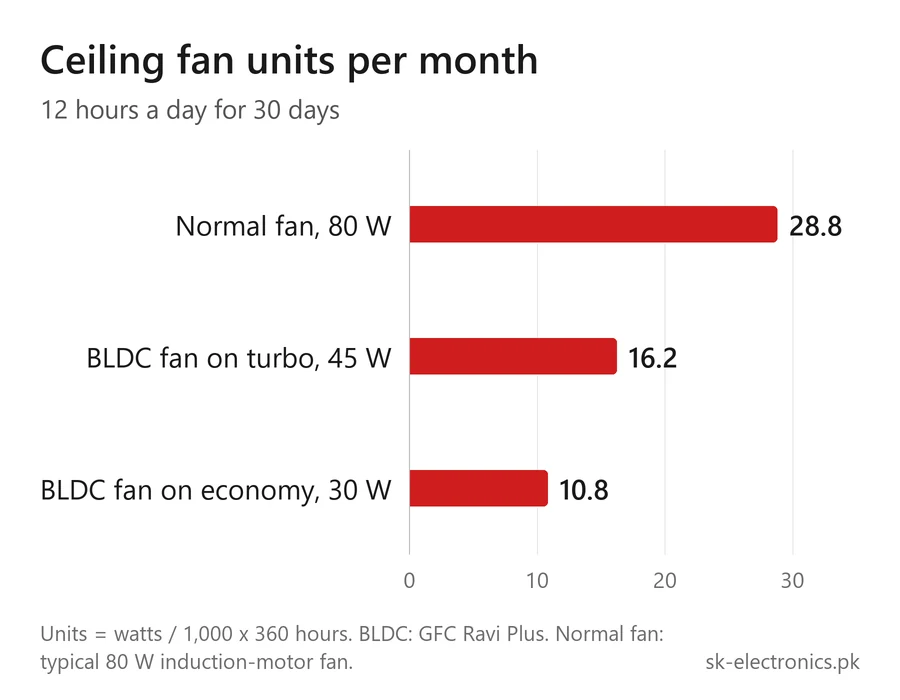
Units on your bill are kilowatt-hours: watts divided by 1,000, times hours. For one fan running 12 hours a day for 30 days (360 hours):
| Fan | Power | Units per month |
|---|---|---|
| Normal fan | 80 W | 28.8 |
| BLDC fan on turbo | 45 W | 16.2 |
| BLDC fan on economy | 30 W | 10.8 |
That is a saving of about 18 units a month per fan in economy mode. A home with five fans running in summer saves about 90 units a month. Multiply by the per-unit rate on your own bill to see the rupee value, and remember that slab-based tariffs can make the saving worth more if it keeps you in a lower slab.
Is a BLDC fan worth it on UPS and solar?
This is where BLDC fans shine. Backup time is roughly battery energy divided by the load, so a fan drawing 30 W instead of 75 W runs about two and a half times longer on the same battery, before inverter losses. During load shedding, that can be the difference between fans running through the night or not. On solar, lower fan power leaves more of your panels’ output for the fridge or an AC; see can an inverter AC run on solar?
Pakistan’s energy labels for fans
Pakistan’s National Energy Efficiency and Conservation Authority (NEECA) runs an energy label for fans. According to CLASP, which supports the programme, mandatory Minimum Energy Performance Standards (MEPS) for fans were enacted in July 2023, and the label uses a rating of 1 to 5 stars. Look for the label when you compare fans.
Is a BLDC fan right for you?
- Yes if fans run long hours in your home, if you rely on a UPS or solar, or if you want a remote and timer.
- Maybe not for a fan used only a little, such as in a guest room, where the saving takes longer to repay the higher price.
- Pair it with your AC: a ceiling fan lets you set the AC a degree or two higher and still feel cool, which saves more than the fan uses. See inverter AC units per hour.
Frequently asked questions
Which is better, a BLDC fan or a normal fan?
A BLDC fan uses much less electricity, about 30 to 45 W for the GFC Ravi Plus against around 75 to 80 W for a conventional fan, and adds a remote, more speeds and a timer. A normal fan costs less to buy.
How many watts does a BLDC fan use?
The GFC Ravi Plus 56 inch BLDC fan is rated at about 30 W in economy mode and about 45 W on turbo.
How many units does a ceiling fan use per month?
At 12 hours a day for 30 days, an 80 W normal fan uses about 29 units and a 30 W BLDC fan about 11 units.
Does a BLDC fan work on UPS?
Yes, and it runs about two and a half times longer on the same battery than a 75 W fan, because it draws less power.
Do BLDC fans give less air?
Not by design. The motor is more efficient, so it can move air with less electricity. Compare the sweep size and the maker’s air delivery figure when choosing.
Next steps
See the GFC Ravi Plus BLDC fan and our ceiling fan range. For cooling a whole room on a budget, read air cooler vs AC, and for every appliance’s watts see the appliance power consumption chart.
Sources
- CLASP, Empowering Efficiency: Lessons from Pakistan’s Energy Labeling Journey: clasp.ngo case study
- Government of India, National Energy Efficient Fan Programme (conventional fans at 75 to 80 W): vikaspedia.in
- Product specifications: GFC Ravi Plus product page on this site.